

今夏のサマーソニック出演を経て、2026年の第68回グラミー賞で最優秀新人賞を含む2部門にノミネートされたグローバル・ガール・グループ、KATSEYE(キャッツアイ)。完売続出のツアー「The BEAUTIFUL CHAOS Tour」の一環で、11月22日に米ニューヨークの名門マディソン・スクエア・ガーデンに登場した彼女たち。
◆You'll find English version after Japanese one. Here's the link.(原文・英語版はこちら)
*
新しい何かの始まり
KATSEYEのコンサートは、画面をスクロールする感覚によく似ている。およそ90分間、マディソン・スクエア・ガーデン内のシアターは、生きたフィードのように姿を変え続け、ひとつの瞬間に落ち着く暇もなく更新されていく。ある瞬間には、未発表の新曲「Internet Girl」の艶やかで過剰にオンライン化された世界の中にいて、6つのシルエットが読み込み中のアイコンのように点滅しているのを眺めているかと思えば、次の瞬間には、アルゴリズムがよりラウドで、ソフトで、奇妙で、甘美な何かを差し出してくる。
そのテンポは、今日の私たちがポップと向き合う姿勢そのものを映し出している。急き立てられているわけではないが、絶えず更新を求め続けられるような感覚。新しい表情。新しいムード。TikTokでは、ほんの一瞬の視線が、動画を国境の向こうまで連れていくことがあるが、ニューヨークの土曜の夜、KATSEYEはまさにその本能に身を委ねていた──HYBEとGeffen Recordsの合同によるグローバル・ガールグループ構想から、グラミー賞最優秀新人賞へのノミネート、そしていまや『The BEAUTIFUL CHAOS Tour』と題した北米を巡る大規模なデビュー・ランへと彼女たちを押し上げた、あの本能に。
K-POPのトレーニング手法によって育成されながら、アメリカで編成され、グローバルな舞台を前提に存在しているガールグループ。KATSEYEという存在そのものが、地理的な枠組みを越えた先で、次のK-POPがどのような姿を取りうるのかを示している。彼女たちはK-POPとアメリカン・ポップの断層線上に立っており、その衝突から立ち上る火花は、新しい何かの始まりを予感させる。
『The Debut: Dream Academy』の頃から彼女たちを追ってきたファンにとって、このステージはひとつの円環が閉じる瞬間でもある。KATSEYEは、常に”断片”として存在してきた──練習室でのクリップ、告白めいたコメント、ファンによるエディット、TikTokのFYP(おすすめページ)に差し込まれる脆さを帯びた一瞬。その断片が、ステージの上で初めて”総体”として立ち上がる。彼女たちの躍進はインターネットの物語だが、ライブはその先を語る。ボーカルは本物だし、スタミナも本物。メンバー同士の結びつきは、スクリーン越しでなくとも確かに感じ取れる。
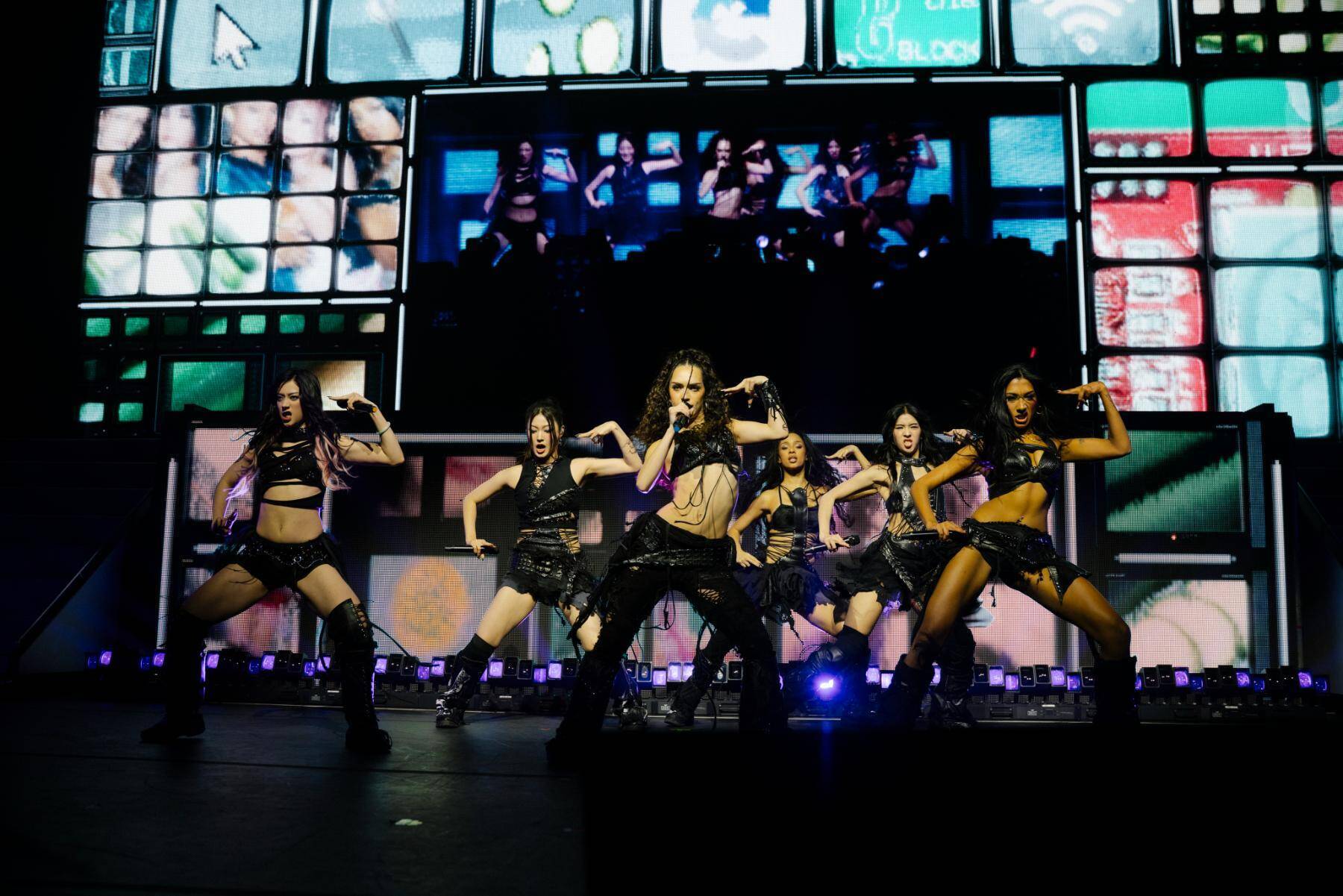
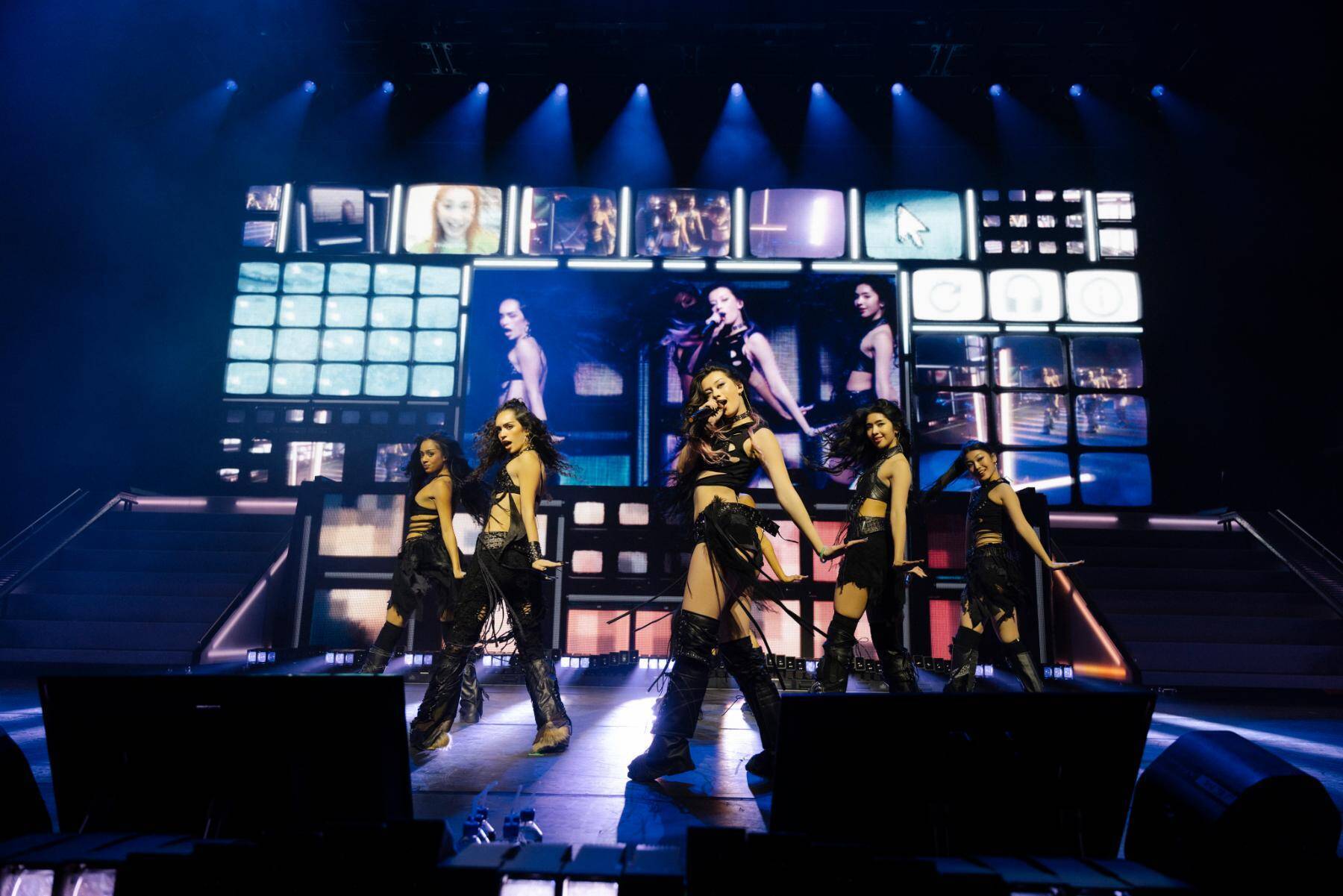
Photo by Rahul Bhatt
いくつかの瞬間は、完璧な7秒編集のような破壊力で突き刺さってくる。DANIELA(ダニエラ)とMEGAN(メーガン)による(「Internet Girl」曲中での)〈eat zucchini〉の素早いかけ合い、「Debut」のダンスブレイクが放つ鋭い切れ味、そしてLARA(ララ)がたったひとつのリフで客席中のスマートフォンを一斉に掲げさせる瞬間。一方で、オンラインでは決して起こりえない、ゆっくりと醸成されていく場面もある。「Time Lapse」でYOONCHAE(ユンチェ)の韓国語ヴァースに合わせて空気がやわらいでいく感覚、「Gabriela」でダニエラのフラメンコ調のブレイクを前にして高まっていく緊張感。このバイラル性と生の質感の均衡こそが、KATSEYEを魅力的な存在にしている。彼女たちは第一印象の作り方を心得ているが、腰を据えて追い続けると、その真価に気づかされる。
2年前、SOPHIA(ソフィア)、MANON(マノン)、ダニエラ、ララ、メーガン、ユンチェの6人は、カメラと制作スタッフの前でオーディションを受ける研修生だった。世界中の視聴者が、自分たちの中に「応援する価値のある何か」を見出してくれることを願いながら。そしていま、KATSEYEの6人は、数百万回の再生数では決して捉えきれないもの、そのサウンドと熱量を肌で感じ取れる場所でパフォーマンスしている。観客たちもその一瞬を求めて、彼女たちの名前を叫び、歌詞を一緒に歌い、空港や駅を越えて運んできた手作りの応援ボードを掲げている。
会場の内側に目を向けると、彼女たちの観客層がいかに広がっているかがよくわかる。ティーンエイジャーのためにコートを持つ親たち。ライトスティックを振る子どもたち。開演前にセルフィーを撮る親友どうし。目の前にいた少年は、父親の隣に座りながら、ためらうことなく「Touch」の振り付けを踊り始める。メーガンのトレードマークであるピンクの前髪を真似たファンたち。客席には30代と思しき観客も点在している──Netflixのドキュメンタリーシリーズをきっかけに辿り着いた人たち、歪んだベースと荒々しいエッジを備えた「Gnarly」に心を掴まれた人たち、あるいはケリスの「Milkshake」を用いた、ミレニアル世代を狙い撃ちにしてバイラル化したGAPのジーンズ広告を通じて彼女たちを知った人たち。KATSEYEの射程範囲がキッズだけに留まらないことを思い知らされる。
照明が落ちた瞬間、歓声が一気に爆発する。「Debut」の電撃的なダンスブレイクで会場を瞬時に覚醒させると、そこからセットは、まるで親指で画面をスワイプするように流れていく。「Gameboy」では素早く挑発的な動きと、フロア全体を跳ねさせるビートで、グループの遊び心が前面に出る。続く「I'm Pretty」と「Mean Girls」では、ボーカルのしなやかな強さを見せつける。『Dream Academy』時代からファンに愛されてきた「Dirty Water」は、より厚みを増した新しいアレンジで披露され、会場には一斉に「あの曲だ」という反応の波が広がる。そしてキラーチューン「M.I.A.」に辿り着く頃には、観客はKATSEYEのエネルギーと完全に同期し、この先どこへ向かおうとも身を委ねる準備ができている。
このコンサートは、自分たちの原点に目を向けながらも、そこに縛られることはない。ステージの終盤、グループは飛躍のきっかけとなったデビューEPのシングル「Touch」を披露すると、イントロのシンセが鳴った瞬間、観客はマッスルメモリーのごとく、思考が追いつく前に反応する。「Touch」はもともと、最初から完成されていた楽曲だ。スムースで瑞々しく、まるで正しい声に出会うのを待っていたかのような一曲。しかし、ライブではその息遣いが変わる。ミュージックビデオの頃より振り付けはほぐれ、フレージングにも遊びが生まれ、音源では目立たなかったハーモニーが浮かび上がる。
型にはまらない6人の個性
「Touch」が彼女たちの到達点だったとすれば、「Gnarly」は、KATSEYEが決して予測可能な存在にとどまらないことを世界に知らしめた瞬間だった。歪みつつゴムのようにうねるベースラインが鳴り響くと、空気が変わる。観客は身構える。その夜、最も大きな歓声を集めたのも、決して偶然ではない。
「Gnarly」は、理屈の上では成立しないはずの楽曲だ。ノイジーかつ荒削りで、構造は混沌としており、まだ自分たちが何者であるかを探っている最中のルーキー・グループにとっては、あまりにも大胆なトーンの急旋回に見える。KATSEYEの上には、自ら名乗ろうと、外から押し付けられようと、常にK-POPというラベルが影のように付きまとってきた。その広い文脈においては、突然のジャンル転換や音響的な急カーブは、ほとんどお約束ですらある。だが、初期の作品がクリーンでメロディアスな方向性に寄っていたKATSEYEにとって、「Gnarly」は単なる実験のための実験ではなく、型にはめられることを拒み、このプロジェクトが当初からひとつの方向性に縛られていなかったことを示すものでもある。
実際にライブで披露されると、その意図は疑いようもなく伝わってくる。
曲間のMCでは、サバイバル番組の頃と同じように、誠実さと緊張が入り混じった語り口が顔を覗かせるが、そこには以前にはなかった安定感がある。自分たちの居場所を掴んだ者の手応えだ。「マディソン・スクエア・ガーデンにやって来たよ、マジで」とララは言う。その口ぶりには、いつか自分がこういうステージに立つことを、最初からどこかで確信していた人間の自信が滲む。続いてダニエラが、「ひとつだけ約束してください。今夜を最高の夜にしよう」と呼びかけると、歓声が身体を震わせるほどの轟音となって会場を満たす。
グラミー賞の最優秀ポップ・デュオ/グループ・パフォーマンス賞へのノミネート以前から、「Gabriela」はすでにKATSEYEのアイデンティティの中核を成す楽曲だった。
2nd EP『BEAUTIFUL CHAOS』は、単一のアイデンティティを追い求める作品ではなく、複数の顔を次々と試している。ハイパーポップ的な質感が柔らかなメロディへと溶け、R&Bの揺らぎはエレクトロニックな実験へとバトンを渡す。ある曲は深夜のドライブのようであり、別の曲はインターネットの深い沼みたいでもある。ときにこのEPは、アプリを切り替え続ける行為を音楽で再現したようにも感じられる。特定のサウンドを求めているなら戸惑うかもしれないが、ひとつのグループが同時に多様でありうることを理解していれば、これほど刺激的なものはない。
すべてをひとつに束ねているのは、ほかでもないメンバー自身だ。6人はそれぞれが明確な個性を持ちながら、決してグループの軌道を外れることがない。メーガンは、どれほど音数の多いアレンジの中でも埋もれない、声と動きの明晰さを備えている。マノンは、力みのない自然な重力をまとい、彼女が一歩動けば、観客もまた同じ方向へ引き寄せられる。ユンチェの感情的な強度は、気づいたときにはもう胸に届いている。「Time Lapse」の最中、「この曲は、私が初めて韓国語で歌えるから、本当に特別なんです」と語ると、その言葉は静けさの中で、確かな重みを伴って響いた。ララは、Netflixのドキュメンタリーシリーズで「スタジアムを満員にできるシンガー」と評された声の持ち主。ライブを観れば、それも大袈裟でなかったことが一瞬でわかる。ソフィアの温かさは、音楽の尖った輪郭をやわらげる。それだけではない。彼女は安心感を与えることも、場を掌握することもできる──その切り替えは、しばしば一曲のうちに起こる。ダニエラがもたらすのは火花だ。パフォーマーとしての本能、スイッチを入れるようなカリスマ性が、ありふれた展開を一気にショーストッパーへと変えてしまう。
インターネット・ガールとポップの未来
サバイバル番組からグローバル・ポップ・アクトへ──KATSEYEの進化そのものは前例のないものではない。だが、その歩み方は異例中の異例だ。彼女たちがデビューしたのは、アーティストと観客の距離がほとんど消滅した時代だった。ファンは、彼女たちの成長をただ見守っていたのではない。そのプロセスに参加し、あらゆる段階に反応し、上達を称え、選択を批評し、リアルタイムでナラティブを紡いでいく。それは本来なら彼女たちを押し潰しかねない状況だったはずだ。だが実際には、それが彼女たちのトレーニング場となった。
Netflixのドキュメンタリーシリーズは、その透明性をさらに押し進め、無防備な状態の彼女たちを映し出した。オンラインとともに育った世代にとって、そうした脆さの提示は信頼を深める行為でもある。楽曲のリリースが始まる頃には、人々はすでに、アルゴリズムとは無関係な理由で彼女たちの成功に感情移入していた──もっとも、アルゴリズムが大きな助けになったことも確かだが。
KATSEYEの音楽の多くは、すでにインターネットと対話している。それは表層的なビジュアルの問題のみにとどまらず、リアルタイムで注目され、評価され続けることに伴う視線そのものを含んでいる。「Mean Girls」でマノンが歌う〈だからインターネットって嫌いなんだよね/でも、あなたたちに私の幸せは壊せない〉(This is why I hate the internet, yes / But youre not gonna kill my happiness)という一節は、彼女たちと出会った人たちの多くが、コメント欄や切り抜き動画を通じて初めて彼女たちを知ったことを思うと、いっそう重く響く。そこにあるのは苛立ちだが、同時に肩をすくめるような距離感もある──ネット空間の言説に歓びを明け渡しはしない、という意思表示だ。
ほんの数秒の瞬間から、まるごと物語が組み立てられていく──文脈を切り離されたリアクション、パーソナリティが推し量られる練習風景、表情ひとつから編み上げられるファンダムの仮説。顕微鏡のような視線が、あらゆるものを物語に変えてしまう。
KATSEYEは、それらを見て見ぬふりはしない。彼女たちはそのなかで歌い抜くのだ。
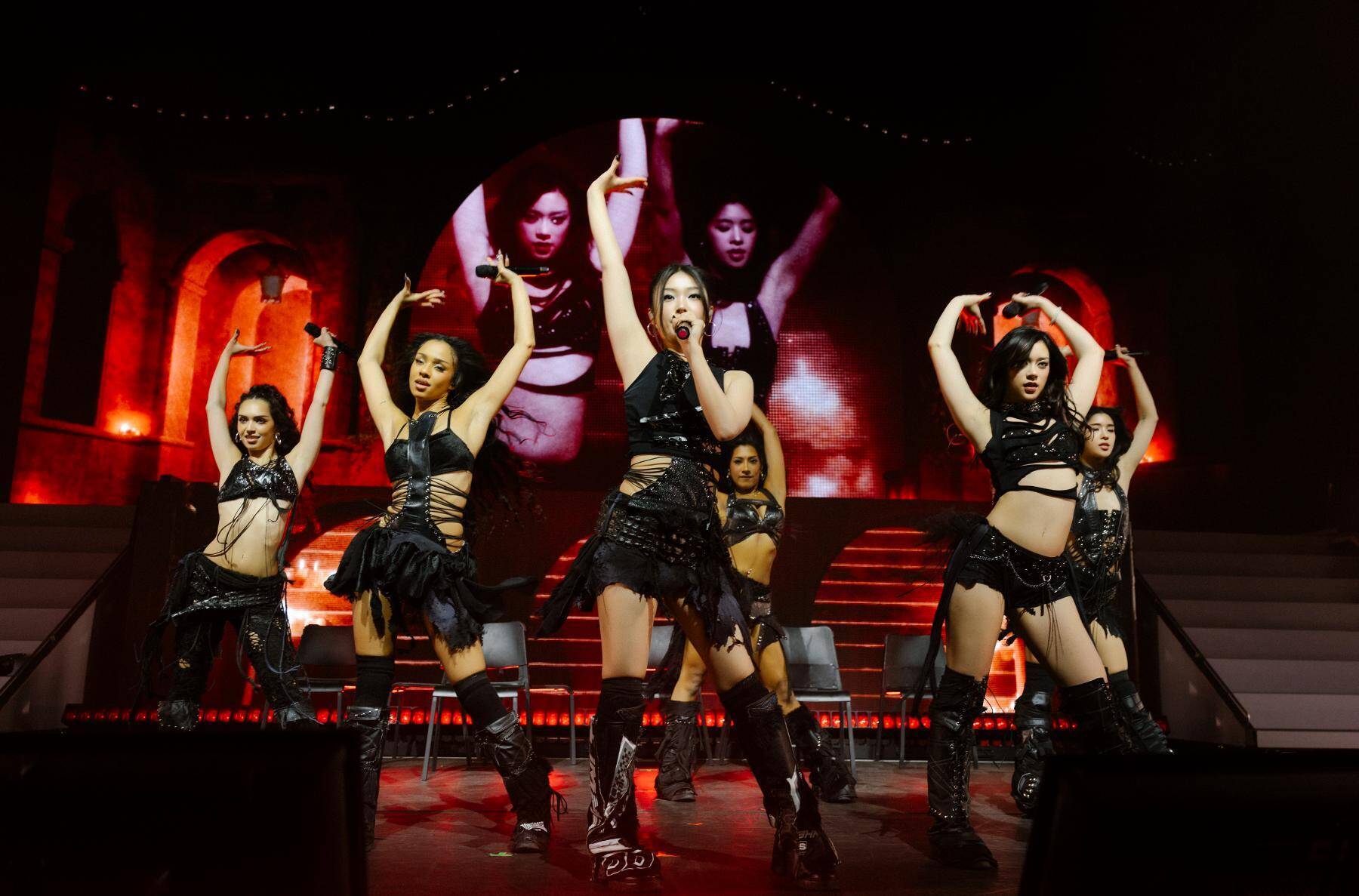
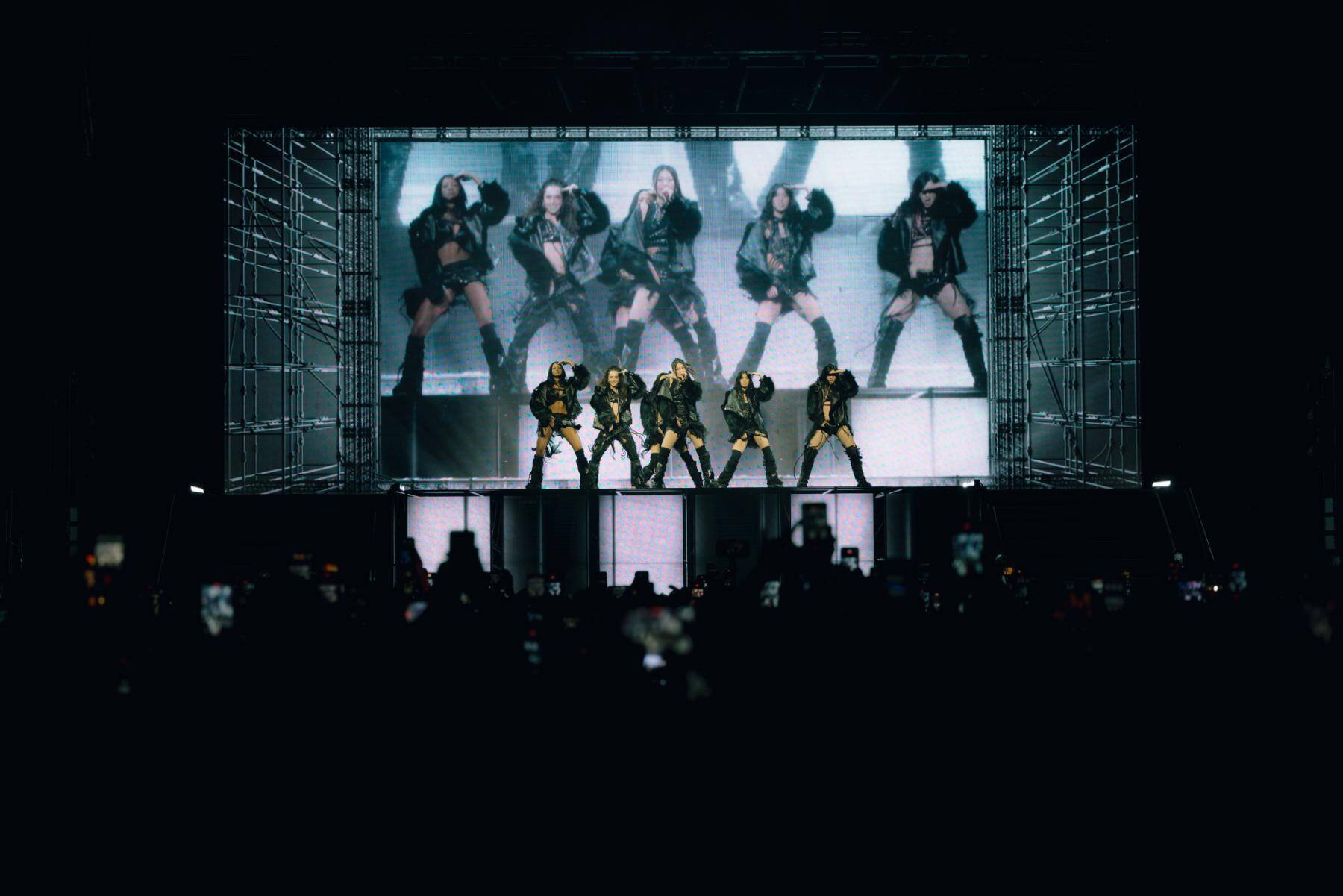
Photo by Rahul Bhatt
今回のツアーで初披露された新曲「Internet Girl」は、その感覚をセルフパロディへと押し広げたポップロック・ナンバーだ。90年代オルタナ・ポップのノスタルジーが一瞬で立ち上がり、1998年のサウンドトラックに紛れ込んでいても違和感のない、軽妙な皮肉と鋭いギターが鳴り響く。楽曲全体が舌を出すようなユーモアに満ちていて、いまや象徴的となった〈eat zucchini〉の一行に至るまで、その調子は貫かれている。それは「近寄らないで(back off )」をPG指定(12歳以上推奨)で言い換えた、ウィンク付きの冗談だ。彼女たちは、自分たちが常に話題の中心にいることをわかっている。あらゆる動きがスクショされ、議論され、解体されることも承知している。その現実から逃げるのではなく、パフォーマンスの中に織り込み、オンライン上の監視そのものを振り付けの一部へと変えてしまうのだ。
ショーの最終盤を前に、スクリーンが一度暗転し、やがて会場の誰もが見たことのない映像とともに再び灯る。そこに映し出されたのは、『The Debut: Dream Academy』当時のバックステージの記録だった。彼女たちは今よりも幼く、顔立ちもまだやわらかで、かつての自分と、なりたい自分とのあいだに立ち尽くしている。その映像は、KATSEYEの物語の多くが、常にカメラの視線のもとで展開してきたことをあらためて思い出させる。
メンバーはそれぞれ、未来の自分に向けた短いメッセージを残す。言葉の細部は、励ましや不安、希望が入り混じって曖昧に溶け合っていくが、込められた感情ははっきりしている。それは、いつかこのステージに立つかもしれない自分自身に語りかける声だ。客席からは、低く、静かなざわめきが広がる。これほど大きな音に包まれた空間では、めったに耳にしない種類の優しさだ。
なかでもララの映像が強く印象に残った。「アーティストとして、この人生を生きること──それは、私自身のためなんです」と、言葉の感触を確かめるように彼女は語る。いま、何千人もの観客が彼女の名前を叫ぶこの場所でそう聞くと、その言葉が予言として、現実の中へと静かに着地していく瞬間を目撃しているかのように感じられる。
照明が再び上がると、メーガンがステージに戻ってきて、スクリーンに映る若い頃の自分を見た瞬間、思わずうめき声を上げる。「うわ、めっちゃイタいね。まだ17歳だったし。でも、今は19歳ですから」と冗談めかして言うと、会場は一斉に笑いに包まれる。とてもシンプルな一言だが、ノスタルジックな空気を、彼女にしかできないやり方で鮮やかに断ち切ってみせる。
この一連の流れが胸に残るのは、その未加工さゆえだ。ドキュメンタリーのように丁寧にキュレーションされたものでもなく、ファンが2年にわたって繰り返し再生してきたオーディション映像のように編集されたものでもない。むしろホームビデオに近く、無数の見知らぬ人々が意見を抱くより前に、彼女たちがどれほど若かったかを思い出させる。そして同時に、この夜の意味合いを塗り替える。すべてのカオスや洗練、スペクタクルの下には、これが本当にうまくいくのかと問い続けてきた長い時間が横たわっているのだ。
このツアーがKATSEYE結成2周年の節目にあたることもあり、そのタイミングには確かな必然性がある。スクリーンの中の少女たちは未来を思い描いていた。そしてステージの上に立つ女性たちは、いま、その未来を生きている。
ショーのラストに向かう流れは、ある種の解放にも感じられる。メンバーはにこやかに笑い、振り付けはほぐれ、掛け合いも肩の力が抜けて、台本めいた感じが薄れていく。彼女たちは一度立ち止まり、息を整え、観客を見渡し、この空間の重みを身体で受け止める。その間(ま)は、サバイバル番組の高速カットや、ドキュメンタリーで削ぎ落とされた編集の中には存在しない種類のものだ。ここで起きていることが、本物なのだとあらためて思い出させてくれる、そんな時間である。
会場に明かりが戻り、観客が会場を後にし始めても、空気はなお帯電したままだ。まるで、どこかでタブがひとつ開いたまま、まだ閉じられていないかのように。その感覚こそが、KATSEYEというプロジェクト全体を最も的確に言い表しているのかもしれない。彼女たちは、ひとつのサウンドや美学に定義されるグループではない。公の場で進化し続け、アイデアを試し、ときに人を戸惑わせ、ときに自分たちを再定義するようなリスクを引き受ける、その姿勢によって形作られている。理解しきる前に次のウィンドウへと滑り込む──その動きは、インターネットそのものに似ている。
確実性(certainty)が重んじられがちな業界で、KATSEYEは将来性(possibility)を選び取る。その審美眼は、きわめて「いま」という時代の感触を帯びている。インターネットから生まれ、グローバルなファンダムに支えられ、ジャンルの規範に縛られない。もしかすると、だからこそ彼女たちは、未来そのもののように感じられるのだろう。
この投稿をInstagramで見るRolling Stone(@rollingstone)がシェアした投稿
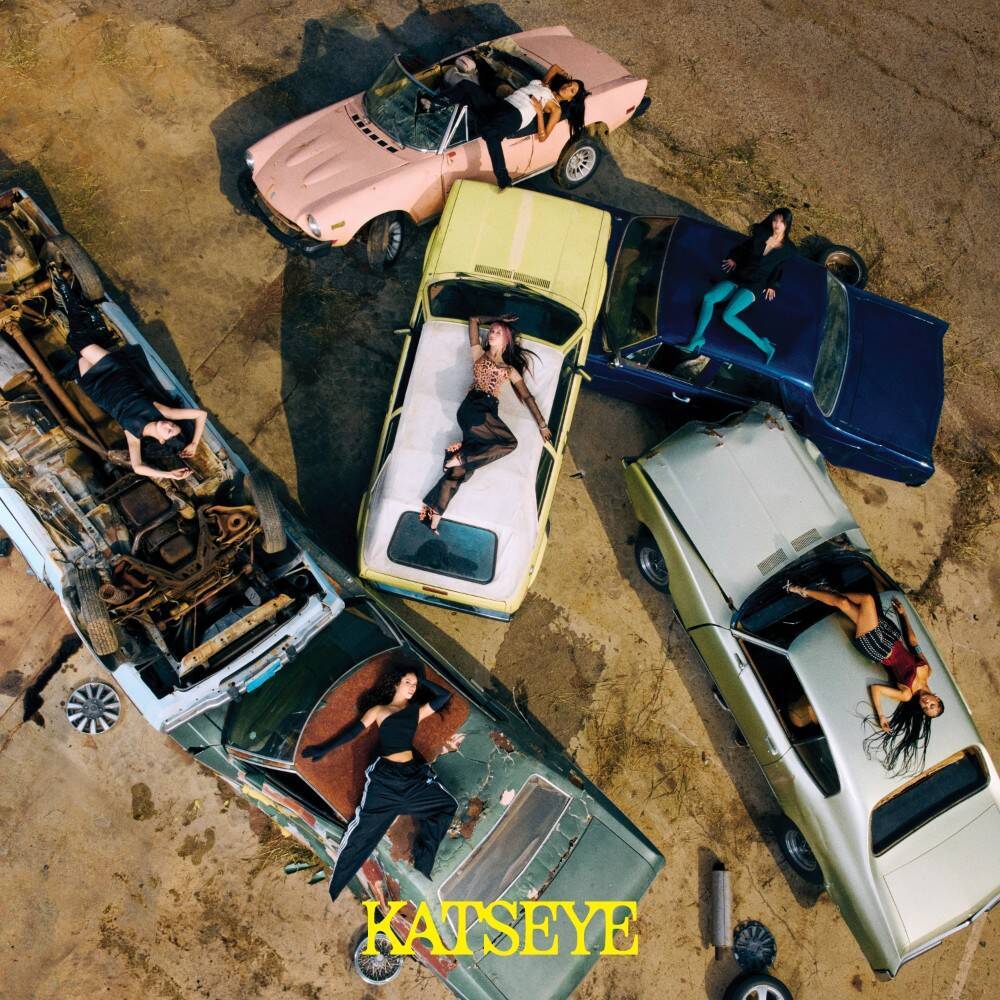
KATSEYE
『BEAUTIFUL CHAOS』
発売中
再生・購入:https://umj.lnk.to/KATSEYE_BC
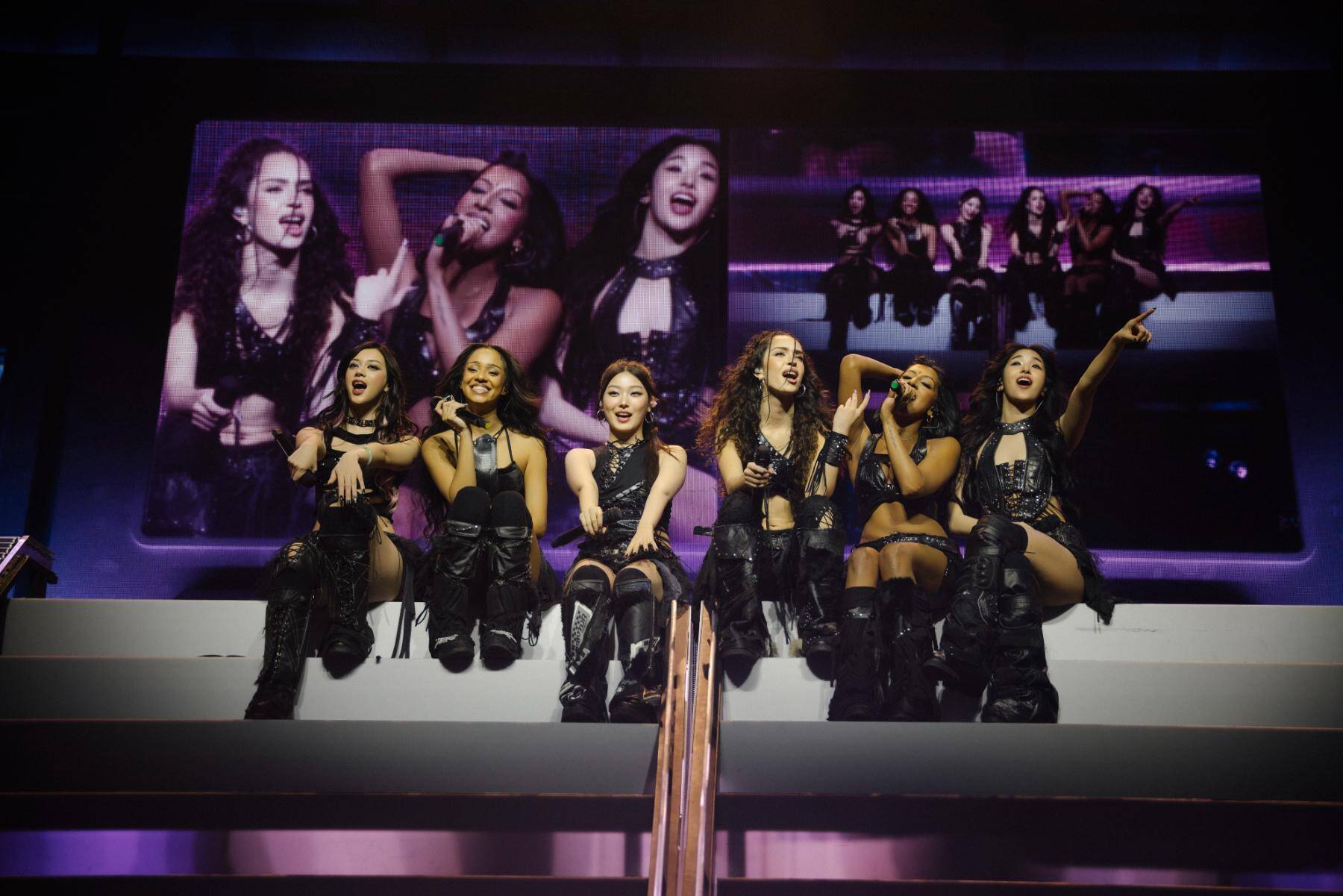
Photo by Rahul Bhatt
The beautiful chaos of KATSEYE's pop experiment
By Crystal Bell
KATSEYE, the global girl group nominated for Best New Artist at the 68th Grammy Awards in 2026, appeared at Madison Square Garden on November 22 as part of The BEAUTIFUL CHAOS Tour. What Crystal Bell witnessed was pops future.
*
A Katseye concert feels a lot like scrolling. For roughly 90 minutes, the Theater at Madison Square Garden turns into a living feed, shifting and updating before you can settle into a single moment. One minute you're inside the glossy, hyper-online world of their new single "Internet Girl," watching six silhouettes flicker like loading icons; the next, the algorithm serves something louder, softer, stranger, sweeter.
The pacing mirrors the way we engage with pop now. Not rushed, exactly, but constantly refreshing. A new formation. A new expression. A new mood. On TikTok, a singular glance can be enough to send a clip across continents; on a Saturday night in New York City, Katseye leaned into that same instinct — the same instinct that helped carry them from a joint HYBE and Geffen Records global girl-group experiment to a coveted Grammy nomination for Best New Artist and, now, a sprawling debut run across North America with the Beautiful Chaos Tour.
Their very existence as a girl group built through K-pop training methods but assembled in the U.S. for a global stage tests what the next wave of K-pop might look like when it moves beyond geography. They sit at the fault line between K-pop and American pop, and the spark that rises from that collision feels like the beginning of something new.
For fans who've followed them since The Debut: Dream Academy, seeing them onstage like this is what feels full circle. Katseye has always existed in pieces: practice-room clips, confessionals, fan edits, moments of vulnerability spliced into TikTok FYPs. Seeing them onstage, those fragments start feeling like a whole. Their rise is an internet story, but the live show explains the rest: the vocals are real, the stamina is real, the connection between the members is something you can feel without looking at a screen.
Photo by Rahul Bhatt
Certain moments hit with the punch of a perfect seven-second edit: Daniela and Megan's quick "eat zucchini" exchange, the snap of the "Debut" dance break, the way Lara can pull every phone into the air with a single riff. Other moments unfold slowly, in a way that could never happen online: the room softening around Yoonchaes Korean verse in "Time Lapse," the tension building before Danielas flamenco-inflected break in "Gabriela." That balance of virality and something more lived-in is what makes Katseye compelling. They know how to make a first impression, but they're even better once you stay.
Two years ago, Sophia Laforteza, Manon Bannerman, Daniela Avanzini, Lara Raj, Megan Skiendiel, and Yoonchae Jeung were trainees auditioning in front of cameras and production staff, hoping viewers around the world would find something in them worth rooting for. Now theyre performing in a venue where they can feel, viscerally, what millions of views never quite capture: the sound of people screaming their names, singing back lyrics, clutching homemade signs that traveled through airports and train stations to be held up at the exact right moment.
Inside the venue, it's clear how wide their audience has become. Parents holding coats for teenagers. Children waving light sticks. Best friends taking pre-show selfies. A young boy in front of me who, without hesitation, starts performing the "Touch" choreography while sitting next to his dad. Fans with pink bangs, styled after Megans signature look. And scattered among them are thirtysomethings, fans who arrived through the Netflix docuseries, or because "Gnarly" and its distorted bass and unruly edges grabbed them, or through the viral Gap jeans ad set to Kelis's "Milkshake," aimed squarely at millennials, reminding you that Katseye's reach goes far beyond kids.
When the lights go down, the roar is immediate. "Debut" zaps the room awake with its electrifying dance break. From there, the set moves like a thumb swipe. "Gameboy" brings out the groups playful side with quick, teasing moves and a beat that gets the whole room bouncing, followed by the vocal flexes of "I'm Pretty" and "Mean Girls." A reworked, fuller version of "Dirty Water" — the song fans have been attached to since the Dream Academy days — draws a wave of recognition, and by the time they hit the hype track "M.I.A.," the room is fully locked in to their energy, ready to follow them wherever the set goes next.
The concert leans into their origins without ever feeling stuck in them. Near the end of night, the group performs "Touch," their breakout single from the first EP, and the audience responds as if the opening synth line is muscle memory. "Touch" has always had that effect: a track that arrived fully formed, smooth and youthful, like something that had been waiting for the right voices. In concert, though, it breathes differently. The choreography has loosened since the music video; the members play with the phrasing, teasing out harmonies that werent as pronounced in the studio version. You can feel the hours theyve spent performing it on music shows in Korea, in rehearsal rooms in Los Angeles, on festival stages, and now here. They hold it with the ease of something lived-in.
But if "Touch" was their arrival, "Gnarly" was the moment the world realized Katseye wasn't going to stay predictable. When the warped, rubbery bassline kicks in, the room shifts. People brace for it. It's no surprise it draws the loudest cheers of the night.
"Gnarly" is the kind of song that shouldnt work on paper: noisy, jagged, structurally chaotic, a tonal left turn for a rookie group still figuring out who they want to be. In the broader landscape of K-pop — a label that has always hung over Katseye like a shadow, whether claimed or imposed — sudden genre pivots and sonic whiplash are almost expected. But for Katseye, whose early work leaned clean and melodic, "Gnarly" wasn't just experimentation for experimentation's sake. It was a declaration. A refusal to be boxed in. A reminder that the project was never meant to follow a single blueprint.
And when they perform it live, that intention becomes unmistakable. The members attack the track with a kind of joyful defiance, like theyre testing the limits of how strange and loud and unruly theyre allowed to be. It feels almost rebellious, as if theyre performing for the versions of themselves who once worried about fitting into a prescribed mold. "Gnarly" didnt just work; it broke something open. It made room for a future where Katseye gets to choose their own tone, even if that tone changes from song to song.
Between songs, the members speak with the same blend of sincerity and nerves they showed during the survival show, but there's a new steadiness to it now, a sense of ownership that wasnt there before. "We're at fucking Madison Square Garden," Lara says, delivered with the confidence of someone who always suspected shed end up on a stage like this. Daniela follows with, "Promise me one thing: lets have the best night ever," and the crowd answers with a roar that feels almost physical.
Even before its Grammy nomination for Best Pop Duo/Group Performance, "Gabriela" had become a centerpiece of their identity, a song where melodrama turns defiantly fun. On record, it plays like a Gen Z "Jolene" — all warnings and side-eyes — and its Latin-pop pulse nods to Daniela's Venezuelan-Cuban heritage. Live, it expands into full spectacle. The flamenco-inspired choreography, threaded with ballroom flourishes from Daniela's own background, gives the song its shape. Then the chairs come out, and the performance tips into something bigger. Daniela anchors an extended dance break — part precision, part attitude — while the rest of the group matches her tension and flare.
Their second EP, Beautiful Chaos, doesn't chase a single identity; it tries on several. Hyperpop textures melt into softer melodies; R&B lilts give way to electronic experimentation. Some songs feel like midnight drives, others like internet rabbit holes. At times, the EP plays like the audio equivalent of switching between apps. It's disorienting if youre expecting a fixed sound, exhilarating if you understand that a group can be many things at once.
What holds it all together is the members themselves. Each one offers something distinct without ever breaking the groups orbit. Megan has a clarity to her tone and movement that cuts through even the busiest arrangements. Manon carries herself with an easy, natural gravity; she shifts, and the crowd shifts with her. Yoonchaes emotional intensity sneaks up on you. During "Time Lapse," she tells the crowd, ”This song is really special to me because I can finally sing in Korean,” and the moment lands with quiet force. Lara has the kind of voice the Netflix docuseries described as ”a singer who can sell out stadiums,” and live, its clear they werent exaggerating. Sophias warmth softens the sharper edges, though thats only half the story; she can reassure or command, often within the span of a single song. And Daniela brings the spark, the performers instinct, the switch-flip charisma that turns a routine into a showstopper.
Katseye's evolution from survival show to global pop act is not the first of its kind, but the way theyve navigated it is unusual. They debuted at a moment when the distance between artists and audiences had all but collapsed. Fans weren't just watching them rise; they were participating in the process, reacting to every stage of development, celebrating improvements, critiquing choices, and building narratives in real time. That could have crushed them. Instead, it became their training ground.
Their Netflix docuseries doubled down on the transparency, showing the group at their most unguarded. For a generation raised online, that kind of vulnerability deepens the trust. By the time they started releasing music, people felt invested in their success for reasons that had nothing to do with algorithms. Though, the algorithms certainly helped.
A lot of Katseyes music is already in conversation with the internet, not just the aesthetics, but the scrutiny that comes with being watched in real time. In "Mean Girls," Manon sings, "This is why I hate the internet, yes / But youre not gonna kill my happiness," a line that lands harder when you remember how many people first met them through comment sections and edited clips online. It's frustration, sure, but delivered with a shrug: a refusal to let the discourse swallow the joy.
Whole narratives have been built out of seconds-long moments — reactions cropped out of context, practice footage turned into personality traits, fandom theories spun from facial expressions. It's the kind of microscope that can turn anything into a storyline.
Katseye doesnt pretend it isn't happening. They sing through it.
Photo by Rahul Bhatt
The group's new pop-rock song "Internet Girl," performed for the first time on this tour, takes that same sentiment and pushes it into self-parody. It arrives with a flash of '90s alt-pop nostalgia, the kind of cheeky sarcasm and crunchy guitars that wouldn't feel out of place on a soundtrack from 1998. The whole song is tongue-in-cheek, right down to the now-iconic "eat zucchini" line — a playful, PG-coded way of saying back off, delivered with a wink. They know theyre the topic of conversation. They know every move gets screenshotted, debated, dissected. Instead of running from that, they fold it into the performance, turning online scrutiny into part of the choreography.
Before the final stretch of the show, the screens fade to black and then flicker back on with footage no one in the venue has seen before: backstage moments from The Debut: Dream Academy. The girls are younger, softer around the edges, still caught between who they were and who they hoped theyd become. Its the kind of archival material that reminds you how much of Katseyes story unfolded under a cameras eye.
Each member offers a brief message to her future self. The specifics blur into a mix of encouragement, uncertainty, and hope, but the sentiment is unmistakable. They were speaking to the versions of themselves who might someday stand on a stage like this one. The crowd responds in a low, collective murmur, a tenderness you dont often hear in a room this loud.
Lara's clip stands out. "Being an artist, living this life, it's for me," she says, as if testing the sentence on her tongue. Hearing it now, with thousands of people screaming her name, feels like watching a prophecy settle into place.
When the lights come back up, Megan reappears onstage and instantly groans at the sight of her younger self. "Wow, I was so cringe. I was, like, 17 years old. But, hey, now Im 19," she jokes, and the room breaks open in laughter. It's such a simple line, but it cuts through the nostalgia the way only she can.
What makes the whole sequence resonate is how unpolished it is. It isn't curated like the docuseries or edited like the audition clips fans have replayed for two years. It feels closer to a home video, a reminder of how young they were when millions of strangers formed opinions about them. It also reframes the night. All the chaos, polish, and spectacle sits on top of years spent wondering whether any of this would work out.
Because this tour marks two years of Katseye, the timing feels earned. The girls on the screen imagined a future. The women onstage are living it.
The final stretch of the show feels like a release. The members laugh more. The choreography loosens. Their banter lands easily and less scripted. They take a moment to breathe, to look at the audience, to let themselves feel the weight of the room. It's the kind of pause that doesn't exist in the fast cuts of a survival show or the vanished edits of a documentary. The kind that reminds you this, right here, is real.
When the lights come up and fans begin filing out, the air still feels charged, as if a tab is open somewhere that hasnt been closed yet. That might be the best way to describe Katseye's entire project. They are a group in motion, defined not by a single sound or aesthetic but by their willingness to evolve in public, to try on ideas, to take risks that sometimes confuse people and other times redefine them. They move the way the internet moves, slipping into a new window before you've made sense of the one before it.
In an industry that often values certainty, Katseye chooses possibility instead. That choice feels unmistakably of this moment: born of the internet, sustained by global fandom, unbothered by genre rules. And maybe that's exactly why they feel like the future.
この投稿をInstagramで見るRolling Stone(@rollingstone)がシェアした投稿
そこで筆者のCrystal Bell氏が目にしたのは、既存の枠組みに縛られないポップの未来だった。
◆You'll find English version after Japanese one. Here's the link.(原文・英語版はこちら)
*
新しい何かの始まり
KATSEYEのコンサートは、画面をスクロールする感覚によく似ている。およそ90分間、マディソン・スクエア・ガーデン内のシアターは、生きたフィードのように姿を変え続け、ひとつの瞬間に落ち着く暇もなく更新されていく。ある瞬間には、未発表の新曲「Internet Girl」の艶やかで過剰にオンライン化された世界の中にいて、6つのシルエットが読み込み中のアイコンのように点滅しているのを眺めているかと思えば、次の瞬間には、アルゴリズムがよりラウドで、ソフトで、奇妙で、甘美な何かを差し出してくる。
そのテンポは、今日の私たちがポップと向き合う姿勢そのものを映し出している。急き立てられているわけではないが、絶えず更新を求め続けられるような感覚。新しい表情。新しいムード。TikTokでは、ほんの一瞬の視線が、動画を国境の向こうまで連れていくことがあるが、ニューヨークの土曜の夜、KATSEYEはまさにその本能に身を委ねていた──HYBEとGeffen Recordsの合同によるグローバル・ガールグループ構想から、グラミー賞最優秀新人賞へのノミネート、そしていまや『The BEAUTIFUL CHAOS Tour』と題した北米を巡る大規模なデビュー・ランへと彼女たちを押し上げた、あの本能に。
K-POPのトレーニング手法によって育成されながら、アメリカで編成され、グローバルな舞台を前提に存在しているガールグループ。KATSEYEという存在そのものが、地理的な枠組みを越えた先で、次のK-POPがどのような姿を取りうるのかを示している。彼女たちはK-POPとアメリカン・ポップの断層線上に立っており、その衝突から立ち上る火花は、新しい何かの始まりを予感させる。
『The Debut: Dream Academy』の頃から彼女たちを追ってきたファンにとって、このステージはひとつの円環が閉じる瞬間でもある。KATSEYEは、常に”断片”として存在してきた──練習室でのクリップ、告白めいたコメント、ファンによるエディット、TikTokのFYP(おすすめページ)に差し込まれる脆さを帯びた一瞬。その断片が、ステージの上で初めて”総体”として立ち上がる。彼女たちの躍進はインターネットの物語だが、ライブはその先を語る。ボーカルは本物だし、スタミナも本物。メンバー同士の結びつきは、スクリーン越しでなくとも確かに感じ取れる。
Photo by Rahul Bhatt
いくつかの瞬間は、完璧な7秒編集のような破壊力で突き刺さってくる。DANIELA(ダニエラ)とMEGAN(メーガン)による(「Internet Girl」曲中での)〈eat zucchini〉の素早いかけ合い、「Debut」のダンスブレイクが放つ鋭い切れ味、そしてLARA(ララ)がたったひとつのリフで客席中のスマートフォンを一斉に掲げさせる瞬間。一方で、オンラインでは決して起こりえない、ゆっくりと醸成されていく場面もある。「Time Lapse」でYOONCHAE(ユンチェ)の韓国語ヴァースに合わせて空気がやわらいでいく感覚、「Gabriela」でダニエラのフラメンコ調のブレイクを前にして高まっていく緊張感。このバイラル性と生の質感の均衡こそが、KATSEYEを魅力的な存在にしている。彼女たちは第一印象の作り方を心得ているが、腰を据えて追い続けると、その真価に気づかされる。
2年前、SOPHIA(ソフィア)、MANON(マノン)、ダニエラ、ララ、メーガン、ユンチェの6人は、カメラと制作スタッフの前でオーディションを受ける研修生だった。世界中の視聴者が、自分たちの中に「応援する価値のある何か」を見出してくれることを願いながら。そしていま、KATSEYEの6人は、数百万回の再生数では決して捉えきれないもの、そのサウンドと熱量を肌で感じ取れる場所でパフォーマンスしている。観客たちもその一瞬を求めて、彼女たちの名前を叫び、歌詞を一緒に歌い、空港や駅を越えて運んできた手作りの応援ボードを掲げている。
会場の内側に目を向けると、彼女たちの観客層がいかに広がっているかがよくわかる。ティーンエイジャーのためにコートを持つ親たち。ライトスティックを振る子どもたち。開演前にセルフィーを撮る親友どうし。目の前にいた少年は、父親の隣に座りながら、ためらうことなく「Touch」の振り付けを踊り始める。メーガンのトレードマークであるピンクの前髪を真似たファンたち。客席には30代と思しき観客も点在している──Netflixのドキュメンタリーシリーズをきっかけに辿り着いた人たち、歪んだベースと荒々しいエッジを備えた「Gnarly」に心を掴まれた人たち、あるいはケリスの「Milkshake」を用いた、ミレニアル世代を狙い撃ちにしてバイラル化したGAPのジーンズ広告を通じて彼女たちを知った人たち。KATSEYEの射程範囲がキッズだけに留まらないことを思い知らされる。
照明が落ちた瞬間、歓声が一気に爆発する。「Debut」の電撃的なダンスブレイクで会場を瞬時に覚醒させると、そこからセットは、まるで親指で画面をスワイプするように流れていく。「Gameboy」では素早く挑発的な動きと、フロア全体を跳ねさせるビートで、グループの遊び心が前面に出る。続く「I'm Pretty」と「Mean Girls」では、ボーカルのしなやかな強さを見せつける。『Dream Academy』時代からファンに愛されてきた「Dirty Water」は、より厚みを増した新しいアレンジで披露され、会場には一斉に「あの曲だ」という反応の波が広がる。そしてキラーチューン「M.I.A.」に辿り着く頃には、観客はKATSEYEのエネルギーと完全に同期し、この先どこへ向かおうとも身を委ねる準備ができている。
このコンサートは、自分たちの原点に目を向けながらも、そこに縛られることはない。ステージの終盤、グループは飛躍のきっかけとなったデビューEPのシングル「Touch」を披露すると、イントロのシンセが鳴った瞬間、観客はマッスルメモリーのごとく、思考が追いつく前に反応する。「Touch」はもともと、最初から完成されていた楽曲だ。スムースで瑞々しく、まるで正しい声に出会うのを待っていたかのような一曲。しかし、ライブではその息遣いが変わる。ミュージックビデオの頃より振り付けはほぐれ、フレージングにも遊びが生まれ、音源では目立たなかったハーモニーが浮かび上がる。
韓国の音楽番組、ロサンゼルスのリハーサルルーム、フェスのステージ、そしてこの夜──彼女たちがこの曲と過ごしてきた膨大な時間が、確かに感じ取れる。つまり「生きた」楽曲を扱う者の余裕だ。
型にはまらない6人の個性
「Touch」が彼女たちの到達点だったとすれば、「Gnarly」は、KATSEYEが決して予測可能な存在にとどまらないことを世界に知らしめた瞬間だった。歪みつつゴムのようにうねるベースラインが鳴り響くと、空気が変わる。観客は身構える。その夜、最も大きな歓声を集めたのも、決して偶然ではない。
「Gnarly」は、理屈の上では成立しないはずの楽曲だ。ノイジーかつ荒削りで、構造は混沌としており、まだ自分たちが何者であるかを探っている最中のルーキー・グループにとっては、あまりにも大胆なトーンの急旋回に見える。KATSEYEの上には、自ら名乗ろうと、外から押し付けられようと、常にK-POPというラベルが影のように付きまとってきた。その広い文脈においては、突然のジャンル転換や音響的な急カーブは、ほとんどお約束ですらある。だが、初期の作品がクリーンでメロディアスな方向性に寄っていたKATSEYEにとって、「Gnarly」は単なる実験のための実験ではなく、型にはめられることを拒み、このプロジェクトが当初からひとつの方向性に縛られていなかったことを示すものでもある。
実際にライブで披露されると、その意図は疑いようもなく伝わってくる。
メンバーは、この曲に一種の歓びに満ちた反抗心をもって挑み、どこまで奇妙で、どこまでラウドで、どこまで制御不能でいられるのかを試しているかのようだ。その姿はほとんど反逆的ですらあり、かつて「型に収まれるだろうか」と不安を抱いていた自分自身に向けて演奏しているようにも見える。「Gnarly」は単に成功したのではない。何かをこじ開けたのだ。曲ごとにトーンが変わったとしても、KATSEYEが自分たち自身の音色を選び取れる未来への余地を。
曲間のMCでは、サバイバル番組の頃と同じように、誠実さと緊張が入り混じった語り口が顔を覗かせるが、そこには以前にはなかった安定感がある。自分たちの居場所を掴んだ者の手応えだ。「マディソン・スクエア・ガーデンにやって来たよ、マジで」とララは言う。その口ぶりには、いつか自分がこういうステージに立つことを、最初からどこかで確信していた人間の自信が滲む。続いてダニエラが、「ひとつだけ約束してください。今夜を最高の夜にしよう」と呼びかけると、歓声が身体を震わせるほどの轟音となって会場を満たす。
グラミー賞の最優秀ポップ・デュオ/グループ・パフォーマンス賞へのノミネート以前から、「Gabriela」はすでにKATSEYEのアイデンティティの中核を成す楽曲だった。
メロドラマを反抗的な歓びへと転換させる一曲。音源では、牽制と探るような視線が飛び交うZ世代版「Jolene」(ドリー・パートンの名曲)のように響き、ラテン・ポップの脈動はダニエラのベネズエラ系/キューバ系というルーツをさりげなく指し示している。だがライブでは、それが完全なスペクタクルへと拡張される。ダニエラ自身のバックグラウンドに根差したフラメンコ風の振り付けに、ボールルーム・ダンスの所作が織り込まれ、楽曲に明確な輪郭を与える。そして椅子が持ち込まれた瞬間、パフォーマンスはさらに大きな次元へと傾いていく。ダニエラが、正確さとアティチュードを併せ持ったロング・ダンスブレイクの軸となり、他のメンバーたちも、その緊張感と華やかさにぴたりと呼応する。
2nd EP『BEAUTIFUL CHAOS』は、単一のアイデンティティを追い求める作品ではなく、複数の顔を次々と試している。ハイパーポップ的な質感が柔らかなメロディへと溶け、R&Bの揺らぎはエレクトロニックな実験へとバトンを渡す。ある曲は深夜のドライブのようであり、別の曲はインターネットの深い沼みたいでもある。ときにこのEPは、アプリを切り替え続ける行為を音楽で再現したようにも感じられる。特定のサウンドを求めているなら戸惑うかもしれないが、ひとつのグループが同時に多様でありうることを理解していれば、これほど刺激的なものはない。
すべてをひとつに束ねているのは、ほかでもないメンバー自身だ。6人はそれぞれが明確な個性を持ちながら、決してグループの軌道を外れることがない。メーガンは、どれほど音数の多いアレンジの中でも埋もれない、声と動きの明晰さを備えている。マノンは、力みのない自然な重力をまとい、彼女が一歩動けば、観客もまた同じ方向へ引き寄せられる。ユンチェの感情的な強度は、気づいたときにはもう胸に届いている。「Time Lapse」の最中、「この曲は、私が初めて韓国語で歌えるから、本当に特別なんです」と語ると、その言葉は静けさの中で、確かな重みを伴って響いた。ララは、Netflixのドキュメンタリーシリーズで「スタジアムを満員にできるシンガー」と評された声の持ち主。ライブを観れば、それも大袈裟でなかったことが一瞬でわかる。ソフィアの温かさは、音楽の尖った輪郭をやわらげる。それだけではない。彼女は安心感を与えることも、場を掌握することもできる──その切り替えは、しばしば一曲のうちに起こる。ダニエラがもたらすのは火花だ。パフォーマーとしての本能、スイッチを入れるようなカリスマ性が、ありふれた展開を一気にショーストッパーへと変えてしまう。
インターネット・ガールとポップの未来
サバイバル番組からグローバル・ポップ・アクトへ──KATSEYEの進化そのものは前例のないものではない。だが、その歩み方は異例中の異例だ。彼女たちがデビューしたのは、アーティストと観客の距離がほとんど消滅した時代だった。ファンは、彼女たちの成長をただ見守っていたのではない。そのプロセスに参加し、あらゆる段階に反応し、上達を称え、選択を批評し、リアルタイムでナラティブを紡いでいく。それは本来なら彼女たちを押し潰しかねない状況だったはずだ。だが実際には、それが彼女たちのトレーニング場となった。
Netflixのドキュメンタリーシリーズは、その透明性をさらに押し進め、無防備な状態の彼女たちを映し出した。オンラインとともに育った世代にとって、そうした脆さの提示は信頼を深める行為でもある。楽曲のリリースが始まる頃には、人々はすでに、アルゴリズムとは無関係な理由で彼女たちの成功に感情移入していた──もっとも、アルゴリズムが大きな助けになったことも確かだが。
KATSEYEの音楽の多くは、すでにインターネットと対話している。それは表層的なビジュアルの問題のみにとどまらず、リアルタイムで注目され、評価され続けることに伴う視線そのものを含んでいる。「Mean Girls」でマノンが歌う〈だからインターネットって嫌いなんだよね/でも、あなたたちに私の幸せは壊せない〉(This is why I hate the internet, yes / But youre not gonna kill my happiness)という一節は、彼女たちと出会った人たちの多くが、コメント欄や切り抜き動画を通じて初めて彼女たちを知ったことを思うと、いっそう重く響く。そこにあるのは苛立ちだが、同時に肩をすくめるような距離感もある──ネット空間の言説に歓びを明け渡しはしない、という意思表示だ。
ほんの数秒の瞬間から、まるごと物語が組み立てられていく──文脈を切り離されたリアクション、パーソナリティが推し量られる練習風景、表情ひとつから編み上げられるファンダムの仮説。顕微鏡のような視線が、あらゆるものを物語に変えてしまう。
KATSEYEは、それらを見て見ぬふりはしない。彼女たちはそのなかで歌い抜くのだ。
Photo by Rahul Bhatt
今回のツアーで初披露された新曲「Internet Girl」は、その感覚をセルフパロディへと押し広げたポップロック・ナンバーだ。90年代オルタナ・ポップのノスタルジーが一瞬で立ち上がり、1998年のサウンドトラックに紛れ込んでいても違和感のない、軽妙な皮肉と鋭いギターが鳴り響く。楽曲全体が舌を出すようなユーモアに満ちていて、いまや象徴的となった〈eat zucchini〉の一行に至るまで、その調子は貫かれている。それは「近寄らないで(back off )」をPG指定(12歳以上推奨)で言い換えた、ウィンク付きの冗談だ。彼女たちは、自分たちが常に話題の中心にいることをわかっている。あらゆる動きがスクショされ、議論され、解体されることも承知している。その現実から逃げるのではなく、パフォーマンスの中に織り込み、オンライン上の監視そのものを振り付けの一部へと変えてしまうのだ。
ショーの最終盤を前に、スクリーンが一度暗転し、やがて会場の誰もが見たことのない映像とともに再び灯る。そこに映し出されたのは、『The Debut: Dream Academy』当時のバックステージの記録だった。彼女たちは今よりも幼く、顔立ちもまだやわらかで、かつての自分と、なりたい自分とのあいだに立ち尽くしている。その映像は、KATSEYEの物語の多くが、常にカメラの視線のもとで展開してきたことをあらためて思い出させる。
メンバーはそれぞれ、未来の自分に向けた短いメッセージを残す。言葉の細部は、励ましや不安、希望が入り混じって曖昧に溶け合っていくが、込められた感情ははっきりしている。それは、いつかこのステージに立つかもしれない自分自身に語りかける声だ。客席からは、低く、静かなざわめきが広がる。これほど大きな音に包まれた空間では、めったに耳にしない種類の優しさだ。
なかでもララの映像が強く印象に残った。「アーティストとして、この人生を生きること──それは、私自身のためなんです」と、言葉の感触を確かめるように彼女は語る。いま、何千人もの観客が彼女の名前を叫ぶこの場所でそう聞くと、その言葉が予言として、現実の中へと静かに着地していく瞬間を目撃しているかのように感じられる。
照明が再び上がると、メーガンがステージに戻ってきて、スクリーンに映る若い頃の自分を見た瞬間、思わずうめき声を上げる。「うわ、めっちゃイタいね。まだ17歳だったし。でも、今は19歳ですから」と冗談めかして言うと、会場は一斉に笑いに包まれる。とてもシンプルな一言だが、ノスタルジックな空気を、彼女にしかできないやり方で鮮やかに断ち切ってみせる。
この一連の流れが胸に残るのは、その未加工さゆえだ。ドキュメンタリーのように丁寧にキュレーションされたものでもなく、ファンが2年にわたって繰り返し再生してきたオーディション映像のように編集されたものでもない。むしろホームビデオに近く、無数の見知らぬ人々が意見を抱くより前に、彼女たちがどれほど若かったかを思い出させる。そして同時に、この夜の意味合いを塗り替える。すべてのカオスや洗練、スペクタクルの下には、これが本当にうまくいくのかと問い続けてきた長い時間が横たわっているのだ。
このツアーがKATSEYE結成2周年の節目にあたることもあり、そのタイミングには確かな必然性がある。スクリーンの中の少女たちは未来を思い描いていた。そしてステージの上に立つ女性たちは、いま、その未来を生きている。
ショーのラストに向かう流れは、ある種の解放にも感じられる。メンバーはにこやかに笑い、振り付けはほぐれ、掛け合いも肩の力が抜けて、台本めいた感じが薄れていく。彼女たちは一度立ち止まり、息を整え、観客を見渡し、この空間の重みを身体で受け止める。その間(ま)は、サバイバル番組の高速カットや、ドキュメンタリーで削ぎ落とされた編集の中には存在しない種類のものだ。ここで起きていることが、本物なのだとあらためて思い出させてくれる、そんな時間である。
会場に明かりが戻り、観客が会場を後にし始めても、空気はなお帯電したままだ。まるで、どこかでタブがひとつ開いたまま、まだ閉じられていないかのように。その感覚こそが、KATSEYEというプロジェクト全体を最も的確に言い表しているのかもしれない。彼女たちは、ひとつのサウンドや美学に定義されるグループではない。公の場で進化し続け、アイデアを試し、ときに人を戸惑わせ、ときに自分たちを再定義するようなリスクを引き受ける、その姿勢によって形作られている。理解しきる前に次のウィンドウへと滑り込む──その動きは、インターネットそのものに似ている。
確実性(certainty)が重んじられがちな業界で、KATSEYEは将来性(possibility)を選び取る。その審美眼は、きわめて「いま」という時代の感触を帯びている。インターネットから生まれ、グローバルなファンダムに支えられ、ジャンルの規範に縛られない。もしかすると、だからこそ彼女たちは、未来そのもののように感じられるのだろう。
この投稿をInstagramで見るRolling Stone(@rollingstone)がシェアした投稿
KATSEYE
『BEAUTIFUL CHAOS』
発売中
再生・購入:https://umj.lnk.to/KATSEYE_BC
Photo by Rahul Bhatt
The beautiful chaos of KATSEYE's pop experiment
By Crystal Bell
KATSEYE, the global girl group nominated for Best New Artist at the 68th Grammy Awards in 2026, appeared at Madison Square Garden on November 22 as part of The BEAUTIFUL CHAOS Tour. What Crystal Bell witnessed was pops future.
*
A Katseye concert feels a lot like scrolling. For roughly 90 minutes, the Theater at Madison Square Garden turns into a living feed, shifting and updating before you can settle into a single moment. One minute you're inside the glossy, hyper-online world of their new single "Internet Girl," watching six silhouettes flicker like loading icons; the next, the algorithm serves something louder, softer, stranger, sweeter.
The pacing mirrors the way we engage with pop now. Not rushed, exactly, but constantly refreshing. A new formation. A new expression. A new mood. On TikTok, a singular glance can be enough to send a clip across continents; on a Saturday night in New York City, Katseye leaned into that same instinct — the same instinct that helped carry them from a joint HYBE and Geffen Records global girl-group experiment to a coveted Grammy nomination for Best New Artist and, now, a sprawling debut run across North America with the Beautiful Chaos Tour.
Their very existence as a girl group built through K-pop training methods but assembled in the U.S. for a global stage tests what the next wave of K-pop might look like when it moves beyond geography. They sit at the fault line between K-pop and American pop, and the spark that rises from that collision feels like the beginning of something new.
For fans who've followed them since The Debut: Dream Academy, seeing them onstage like this is what feels full circle. Katseye has always existed in pieces: practice-room clips, confessionals, fan edits, moments of vulnerability spliced into TikTok FYPs. Seeing them onstage, those fragments start feeling like a whole. Their rise is an internet story, but the live show explains the rest: the vocals are real, the stamina is real, the connection between the members is something you can feel without looking at a screen.
Photo by Rahul Bhatt
Certain moments hit with the punch of a perfect seven-second edit: Daniela and Megan's quick "eat zucchini" exchange, the snap of the "Debut" dance break, the way Lara can pull every phone into the air with a single riff. Other moments unfold slowly, in a way that could never happen online: the room softening around Yoonchaes Korean verse in "Time Lapse," the tension building before Danielas flamenco-inflected break in "Gabriela." That balance of virality and something more lived-in is what makes Katseye compelling. They know how to make a first impression, but they're even better once you stay.
Two years ago, Sophia Laforteza, Manon Bannerman, Daniela Avanzini, Lara Raj, Megan Skiendiel, and Yoonchae Jeung were trainees auditioning in front of cameras and production staff, hoping viewers around the world would find something in them worth rooting for. Now theyre performing in a venue where they can feel, viscerally, what millions of views never quite capture: the sound of people screaming their names, singing back lyrics, clutching homemade signs that traveled through airports and train stations to be held up at the exact right moment.
Inside the venue, it's clear how wide their audience has become. Parents holding coats for teenagers. Children waving light sticks. Best friends taking pre-show selfies. A young boy in front of me who, without hesitation, starts performing the "Touch" choreography while sitting next to his dad. Fans with pink bangs, styled after Megans signature look. And scattered among them are thirtysomethings, fans who arrived through the Netflix docuseries, or because "Gnarly" and its distorted bass and unruly edges grabbed them, or through the viral Gap jeans ad set to Kelis's "Milkshake," aimed squarely at millennials, reminding you that Katseye's reach goes far beyond kids.
When the lights go down, the roar is immediate. "Debut" zaps the room awake with its electrifying dance break. From there, the set moves like a thumb swipe. "Gameboy" brings out the groups playful side with quick, teasing moves and a beat that gets the whole room bouncing, followed by the vocal flexes of "I'm Pretty" and "Mean Girls." A reworked, fuller version of "Dirty Water" — the song fans have been attached to since the Dream Academy days — draws a wave of recognition, and by the time they hit the hype track "M.I.A.," the room is fully locked in to their energy, ready to follow them wherever the set goes next.
The concert leans into their origins without ever feeling stuck in them. Near the end of night, the group performs "Touch," their breakout single from the first EP, and the audience responds as if the opening synth line is muscle memory. "Touch" has always had that effect: a track that arrived fully formed, smooth and youthful, like something that had been waiting for the right voices. In concert, though, it breathes differently. The choreography has loosened since the music video; the members play with the phrasing, teasing out harmonies that werent as pronounced in the studio version. You can feel the hours theyve spent performing it on music shows in Korea, in rehearsal rooms in Los Angeles, on festival stages, and now here. They hold it with the ease of something lived-in.
But if "Touch" was their arrival, "Gnarly" was the moment the world realized Katseye wasn't going to stay predictable. When the warped, rubbery bassline kicks in, the room shifts. People brace for it. It's no surprise it draws the loudest cheers of the night.
"Gnarly" is the kind of song that shouldnt work on paper: noisy, jagged, structurally chaotic, a tonal left turn for a rookie group still figuring out who they want to be. In the broader landscape of K-pop — a label that has always hung over Katseye like a shadow, whether claimed or imposed — sudden genre pivots and sonic whiplash are almost expected. But for Katseye, whose early work leaned clean and melodic, "Gnarly" wasn't just experimentation for experimentation's sake. It was a declaration. A refusal to be boxed in. A reminder that the project was never meant to follow a single blueprint.
And when they perform it live, that intention becomes unmistakable. The members attack the track with a kind of joyful defiance, like theyre testing the limits of how strange and loud and unruly theyre allowed to be. It feels almost rebellious, as if theyre performing for the versions of themselves who once worried about fitting into a prescribed mold. "Gnarly" didnt just work; it broke something open. It made room for a future where Katseye gets to choose their own tone, even if that tone changes from song to song.
Between songs, the members speak with the same blend of sincerity and nerves they showed during the survival show, but there's a new steadiness to it now, a sense of ownership that wasnt there before. "We're at fucking Madison Square Garden," Lara says, delivered with the confidence of someone who always suspected shed end up on a stage like this. Daniela follows with, "Promise me one thing: lets have the best night ever," and the crowd answers with a roar that feels almost physical.
Even before its Grammy nomination for Best Pop Duo/Group Performance, "Gabriela" had become a centerpiece of their identity, a song where melodrama turns defiantly fun. On record, it plays like a Gen Z "Jolene" — all warnings and side-eyes — and its Latin-pop pulse nods to Daniela's Venezuelan-Cuban heritage. Live, it expands into full spectacle. The flamenco-inspired choreography, threaded with ballroom flourishes from Daniela's own background, gives the song its shape. Then the chairs come out, and the performance tips into something bigger. Daniela anchors an extended dance break — part precision, part attitude — while the rest of the group matches her tension and flare.
Their second EP, Beautiful Chaos, doesn't chase a single identity; it tries on several. Hyperpop textures melt into softer melodies; R&B lilts give way to electronic experimentation. Some songs feel like midnight drives, others like internet rabbit holes. At times, the EP plays like the audio equivalent of switching between apps. It's disorienting if youre expecting a fixed sound, exhilarating if you understand that a group can be many things at once.
What holds it all together is the members themselves. Each one offers something distinct without ever breaking the groups orbit. Megan has a clarity to her tone and movement that cuts through even the busiest arrangements. Manon carries herself with an easy, natural gravity; she shifts, and the crowd shifts with her. Yoonchaes emotional intensity sneaks up on you. During "Time Lapse," she tells the crowd, ”This song is really special to me because I can finally sing in Korean,” and the moment lands with quiet force. Lara has the kind of voice the Netflix docuseries described as ”a singer who can sell out stadiums,” and live, its clear they werent exaggerating. Sophias warmth softens the sharper edges, though thats only half the story; she can reassure or command, often within the span of a single song. And Daniela brings the spark, the performers instinct, the switch-flip charisma that turns a routine into a showstopper.
Katseye's evolution from survival show to global pop act is not the first of its kind, but the way theyve navigated it is unusual. They debuted at a moment when the distance between artists and audiences had all but collapsed. Fans weren't just watching them rise; they were participating in the process, reacting to every stage of development, celebrating improvements, critiquing choices, and building narratives in real time. That could have crushed them. Instead, it became their training ground.
Their Netflix docuseries doubled down on the transparency, showing the group at their most unguarded. For a generation raised online, that kind of vulnerability deepens the trust. By the time they started releasing music, people felt invested in their success for reasons that had nothing to do with algorithms. Though, the algorithms certainly helped.
A lot of Katseyes music is already in conversation with the internet, not just the aesthetics, but the scrutiny that comes with being watched in real time. In "Mean Girls," Manon sings, "This is why I hate the internet, yes / But youre not gonna kill my happiness," a line that lands harder when you remember how many people first met them through comment sections and edited clips online. It's frustration, sure, but delivered with a shrug: a refusal to let the discourse swallow the joy.
Whole narratives have been built out of seconds-long moments — reactions cropped out of context, practice footage turned into personality traits, fandom theories spun from facial expressions. It's the kind of microscope that can turn anything into a storyline.
Katseye doesnt pretend it isn't happening. They sing through it.
Photo by Rahul Bhatt
The group's new pop-rock song "Internet Girl," performed for the first time on this tour, takes that same sentiment and pushes it into self-parody. It arrives with a flash of '90s alt-pop nostalgia, the kind of cheeky sarcasm and crunchy guitars that wouldn't feel out of place on a soundtrack from 1998. The whole song is tongue-in-cheek, right down to the now-iconic "eat zucchini" line — a playful, PG-coded way of saying back off, delivered with a wink. They know theyre the topic of conversation. They know every move gets screenshotted, debated, dissected. Instead of running from that, they fold it into the performance, turning online scrutiny into part of the choreography.
Before the final stretch of the show, the screens fade to black and then flicker back on with footage no one in the venue has seen before: backstage moments from The Debut: Dream Academy. The girls are younger, softer around the edges, still caught between who they were and who they hoped theyd become. Its the kind of archival material that reminds you how much of Katseyes story unfolded under a cameras eye.
Each member offers a brief message to her future self. The specifics blur into a mix of encouragement, uncertainty, and hope, but the sentiment is unmistakable. They were speaking to the versions of themselves who might someday stand on a stage like this one. The crowd responds in a low, collective murmur, a tenderness you dont often hear in a room this loud.
Lara's clip stands out. "Being an artist, living this life, it's for me," she says, as if testing the sentence on her tongue. Hearing it now, with thousands of people screaming her name, feels like watching a prophecy settle into place.
When the lights come back up, Megan reappears onstage and instantly groans at the sight of her younger self. "Wow, I was so cringe. I was, like, 17 years old. But, hey, now Im 19," she jokes, and the room breaks open in laughter. It's such a simple line, but it cuts through the nostalgia the way only she can.
What makes the whole sequence resonate is how unpolished it is. It isn't curated like the docuseries or edited like the audition clips fans have replayed for two years. It feels closer to a home video, a reminder of how young they were when millions of strangers formed opinions about them. It also reframes the night. All the chaos, polish, and spectacle sits on top of years spent wondering whether any of this would work out.
Because this tour marks two years of Katseye, the timing feels earned. The girls on the screen imagined a future. The women onstage are living it.
The final stretch of the show feels like a release. The members laugh more. The choreography loosens. Their banter lands easily and less scripted. They take a moment to breathe, to look at the audience, to let themselves feel the weight of the room. It's the kind of pause that doesn't exist in the fast cuts of a survival show or the vanished edits of a documentary. The kind that reminds you this, right here, is real.
When the lights come up and fans begin filing out, the air still feels charged, as if a tab is open somewhere that hasnt been closed yet. That might be the best way to describe Katseye's entire project. They are a group in motion, defined not by a single sound or aesthetic but by their willingness to evolve in public, to try on ideas, to take risks that sometimes confuse people and other times redefine them. They move the way the internet moves, slipping into a new window before you've made sense of the one before it.
In an industry that often values certainty, Katseye chooses possibility instead. That choice feels unmistakably of this moment: born of the internet, sustained by global fandom, unbothered by genre rules. And maybe that's exactly why they feel like the future.
この投稿をInstagramで見るRolling Stone(@rollingstone)がシェアした投稿
編集部おすすめ


![VVS (初回盤) (BD) [Blu-ray]](https://m.media-amazon.com/images/I/51lAumaB-aL._SL500_.jpg)


